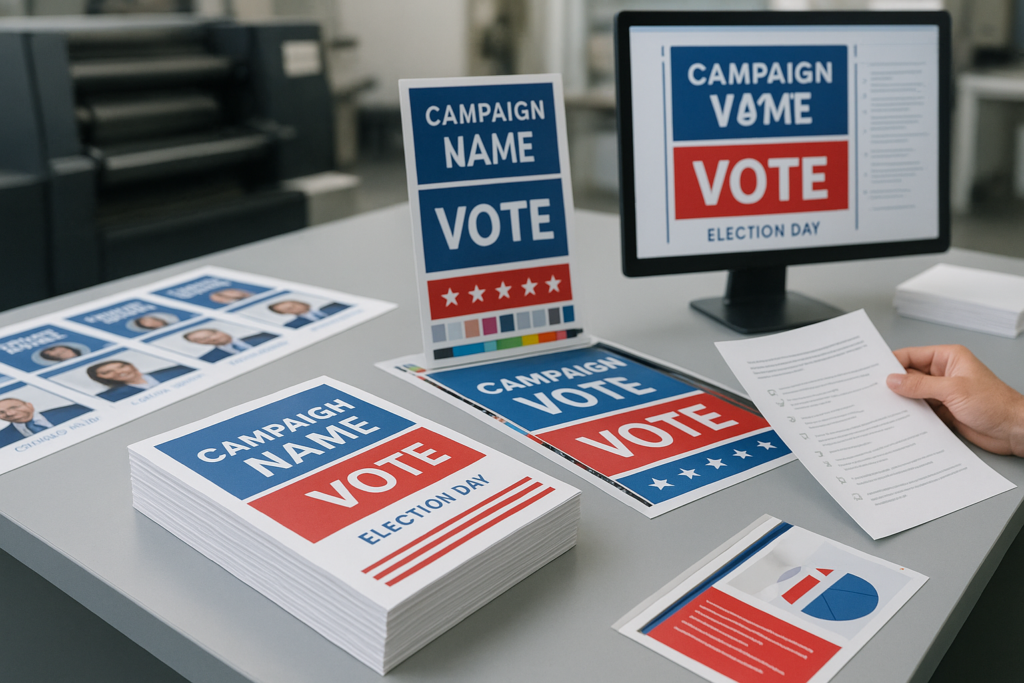
Political campaign printing often has tight deadlines, changing messages, and a lot of moving parts. Whether you’re supporting a local candidate, issue campaign, school board race, advocacy effort, or voter outreach program, print still plays a practical role in getting information into people’s hands.
The challenge is that campaign print projects can get complicated fast. A flyer may need revisions after a committee meeting. A direct mail piece may need mailing specifications checked. A banner may need to be readable from across a parking lot. The earlier you plan, the easier it is to avoid file problems, rushed approvals, and missed opportunities.
This guide covers what to know before ordering political campaign printing, including common products, artwork setup, paper choices, timelines, proofing, and when to bring your print shop into the conversation.
What Political Campaign Printing Usually Includes
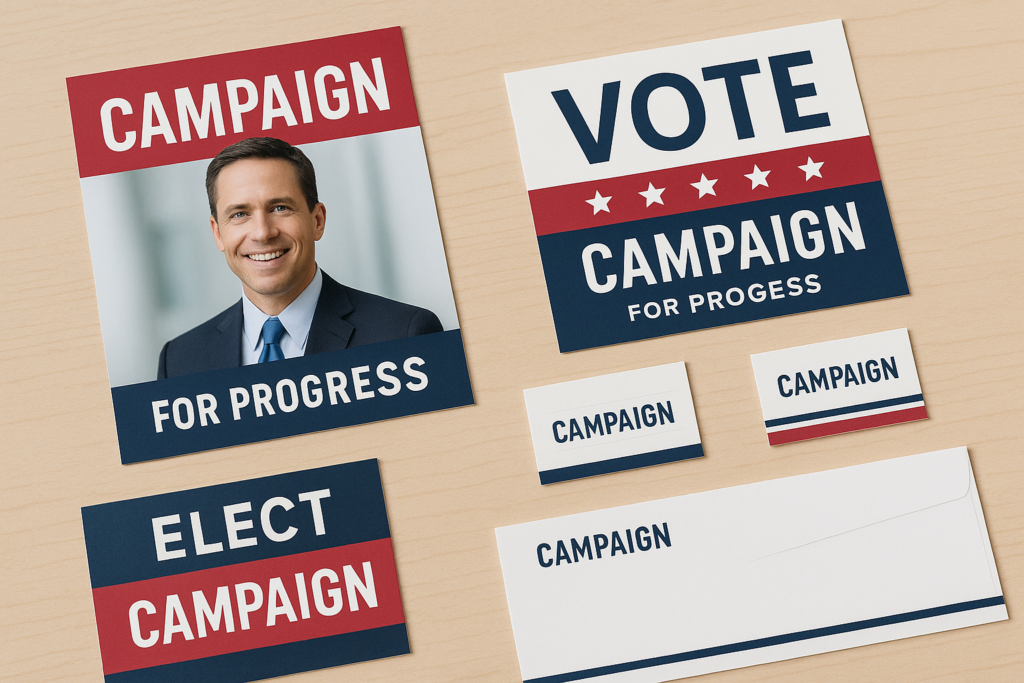
Political campaign printing can include small handouts, large outdoor graphics, direct mail, event materials, office supplies, and donor or volunteer communications. Most campaigns need a mix of materials because each piece serves a different purpose.
For example, a walk card is useful for canvassing. A mailer can reach voters at home. A banner can support a rally or campaign office. Business cards help candidates, staff, and volunteers share contact information during events and meetings.
Common campaign print materials include:
- Campaign flyers and palm cards
- Door hangers and walk literature
- Political postcards and direct mail pieces
- Yard signs and event signage
- Banners for rallies, offices, and outdoor visibility
- Volunteer packets, forms, and handouts
- Donation envelopes and reply materials
- Candidate business cards and appointment cards
If you’re not sure which format fits your campaign, reviewing options for flyer printing, direct mail printing, banner printing, and business card printing can help you narrow down the best approach.
Start With the Campaign Goal Before Choosing Products
Before choosing paper, size, or quantity, define what the printed piece needs to do. Campaign teams sometimes start by saying, “We need 5,000 flyers,” when the better first question is, “What action should this piece support?”
A voter education piece may need more room for issue details. A get-out-the-vote postcard may need a simple message, key dates, and a clear call to action. A fundraising invitation may need to look more polished than a volunteer recruitment handout.
Ask these questions before requesting a quote:
- Who is the audience?
- Will the piece be mailed, handed out, posted, or displayed?
- Does it need to include legal disclaimers or committee information?
- How many versions are needed for different districts or voter groups?
- Who will approve the final artwork?
- Is there a hard event, mailing, or filing deadline?
The answers help your printer recommend a format that fits the purpose of the project rather than guessing from a rough description.
Common Printed Materials for Political Campaigns
Campaign flyers and palm cards
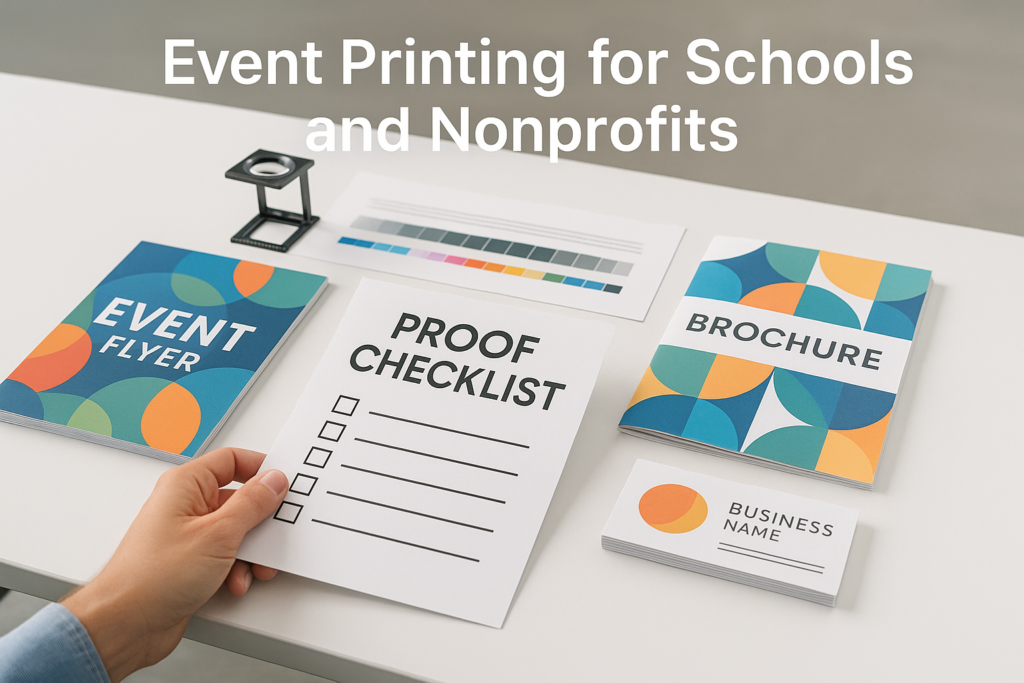
Flyers, palm cards, and walk cards are some of the most common campaign pieces because they’re easy to distribute at doors, events, offices, and community meetings. They usually need a strong headline, candidate or issue information, key dates, a website, and a visible call to action.
Keep the design readable. If volunteers will hand out the piece quickly, voters may only glance at it for a few seconds. Large text, simple sections, and a clear hierarchy can help.
Political direct mail
Direct mail is often used for voter outreach, fundraising, event reminders, and issue education. Mailing projects need more planning because artwork, address data, postal requirements, and production schedules all need to line up.
If you’re planning political mailers, talk to your printer early. File size, panel layout, indicia placement, address areas, folds, and list handling can affect production. Premier Printing Services offers direct mail printing, and the right specifications should be confirmed before artwork is finalized.
Banners, signs, and event graphics
Campaign banners are useful for headquarters, rallies, outdoor events, press backdrops, and volunteer check-in areas. For large-format graphics, readability matters more than small design details. A sign viewed from a distance should have strong contrast and minimal clutter.
Before ordering, confirm where the banner or sign will be used, how it will be installed, and whether finishing options such as grommets, hems, stands, or other mounting methods are appropriate for the setting.
Business cards and office materials
Candidates, campaign managers, field organizers, and fundraising staff may need business cards or office materials for meetings and events. Even if the campaign is temporary, consistent contact materials can make communication easier and more professional.
Campaign offices may also need envelopes, forms, volunteer instructions, donor packets, or branded letterhead. If you’re ordering multiple items, ask whether files can be reviewed together so colors, logos, and names stay consistent.
File Setup Tips Before Sending Campaign Artwork
File setup is one of the biggest reasons campaign printing projects slow down. A design might look fine on screen but still have issues with bleed, margins, low-resolution images, missing fonts, or color setup.
Before sending files, review the artwork requirements with your printer. Premier Printing Services provides a helpful Prepress Toolkit for file setup, artwork preparation, proofing, bleed, resolution, and related print questions.
Here are practical items to check:
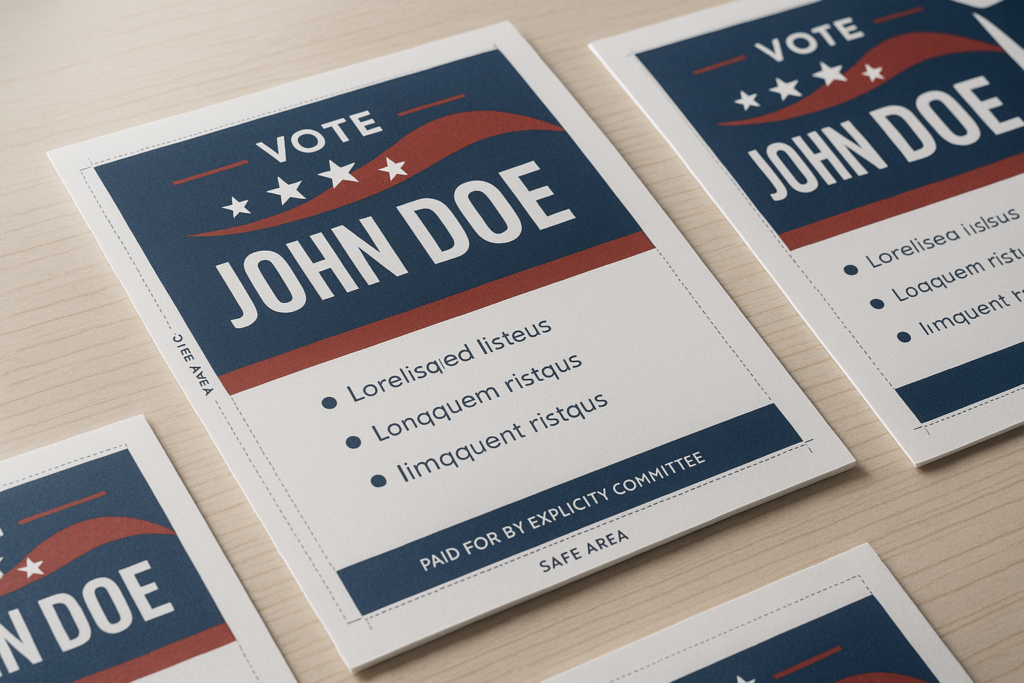
- Bleed: If color, photos, or graphics run to the edge, the file may need bleed beyond the trim line.
- Safety margins: Keep important text, logos, and disclaimers away from trim edges and folds.
- Resolution: Use print-ready images. Low-resolution web graphics can look soft or pixelated in print.
- Fonts: Embed fonts or outline text when appropriate, based on the printer’s file guidelines.
- Color: Confirm whether files should be supplied in CMYK or another color setup for the production method.
- Final size: Make sure the artwork matches the intended finished size.
- Versions: Label files clearly if there are multiple candidates, districts, languages, or messages.
If bleed and margins are new to you, the article Bleed, Trim, and Safety Margins in Printing is a useful place to start.
Timeline Planning and Proofing
Political campaigns often work under pressure, but print production still needs time for file review, proofing, revisions, production, finishing, and delivery or pickup. Exact timing depends on the product, quantity, materials, finishing, and current production schedule, so always confirm with the print shop before making public plans around a delivery date.
Build in time for approvals. Campaign materials may need review by the candidate, campaign manager, treasurer, legal advisor, compliance contact, or committee chair. If several people must approve the file, assign one person to collect feedback and send final instructions to the printer.
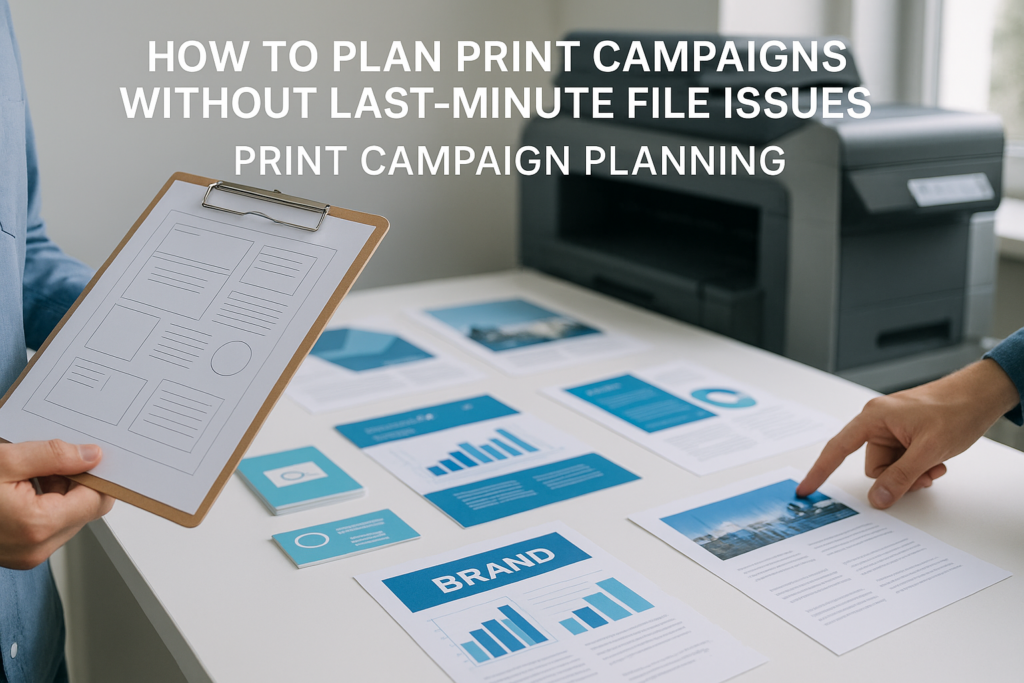
For larger campaigns or repeated print orders, it can help to create a simple production calendar. Premier Printing Services has a related guide on how to plan print campaigns without last-minute file issues, which is useful for marketing teams and campaign coordinators managing several pieces at once.
Paper, Size, and Finishing Considerations
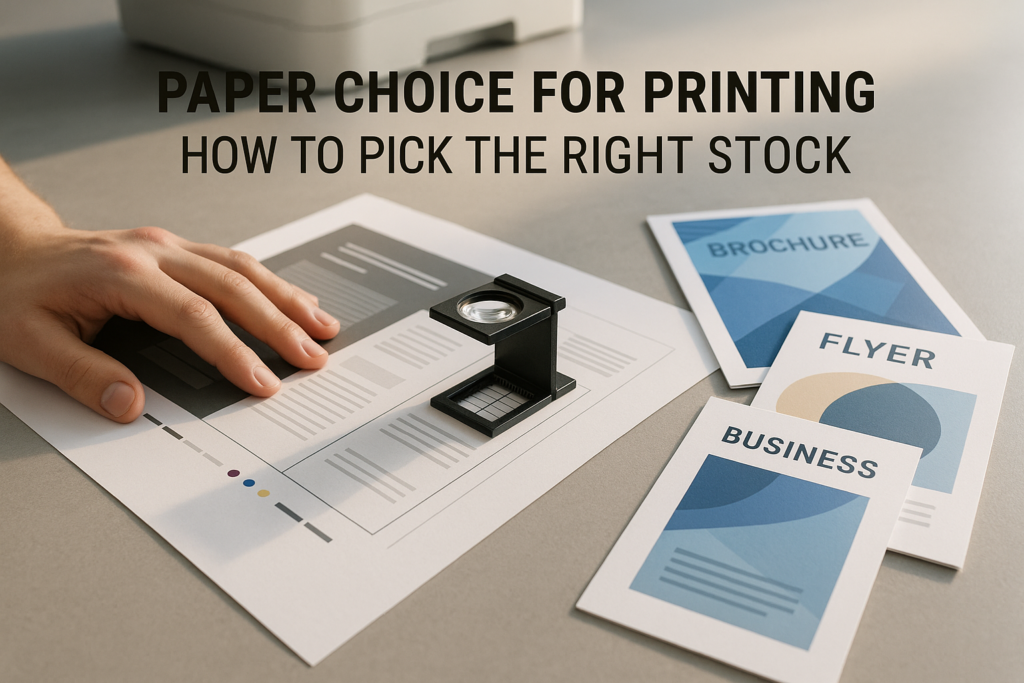
The right paper and finish depend on how the piece will be used. A handout for canvassing may have different needs than a donor invitation or direct mail postcard. Outdoor materials may need different durability considerations than indoor event signage.
When requesting a quote, be ready to discuss:
- Finished size
- Quantity
- Single-sided or double-sided printing
- Paper weight or general paper preference
- Coated or uncoated finish
- Folding, scoring, cutting, or drilling needs
- Mailing, bundling, or packaging requirements
- Delivery or pickup needs
You don’t need to know every technical detail before contacting a printer. A good print conversation can start with how the piece will be used, when it’s needed, and what artwork is available.
Compliance and Disclaimer Reminders
Political printing may require disclaimers, committee information, funding statements, or other legally required language. Requirements can vary based on location, campaign type, funding source, and distribution method.
Your printer can help make sure the required text is readable and positioned properly from a print production standpoint, but campaign compliance should be confirmed with the appropriate election authority, legal advisor, or campaign compliance contact. Don’t wait until after proof approval to add disclaimer text, because it can change the design and layout.
Common Campaign Printing Mistakes to Avoid
Most print problems are preventable when the campaign team and printer communicate early. Watch for these common issues:
- Sending low-resolution logos pulled from websites or social media
- Forgetting bleed on artwork with full-color backgrounds
- Placing disclaimer text too close to the trim edge
- Using multiple versions of a file without clear names
- Changing the message after proof approval
- Not allowing enough time for internal approvals
- Designing a direct mail piece without confirming postal layout requirements
- Ordering signs or banners without discussing installation conditions
If you’re managing many campaign assets, a dedicated ordering or file submission process may help reduce confusion. The article Why Small Businesses Benefit From a Dedicated Portal explains how portals can simplify repeat ordering and brand consistency for organizations with ongoing print needs.
When to Ask Your Printer for Help
It’s worth contacting your printer before the design is final if the project involves mailing, large-format graphics, multiple versions, unusual sizes, special finishing, or a strict deadline. Early guidance can prevent redesigns and help you order materials that fit the campaign’s real-world needs.
You should also ask for help if you’re unsure whether your file is print-ready. A prepress review can identify potential issues before production. For quotes, upload details, or project questions, you can start with the request a quote page or explore general business printing services if your campaign needs several types of materials.
Conclusion: Plan Political Campaign Printing Before the Rush
Political campaign printing works best when the message, audience, artwork, compliance text, and schedule are planned together. Flyers, mailers, banners, signs, and office materials all have different production needs, so it’s better to ask questions early than to fix files at the last minute.
If you’re preparing campaign print materials and want help choosing formats, checking files, or planning the next order, contact Premier Printing Services for more information or project help.