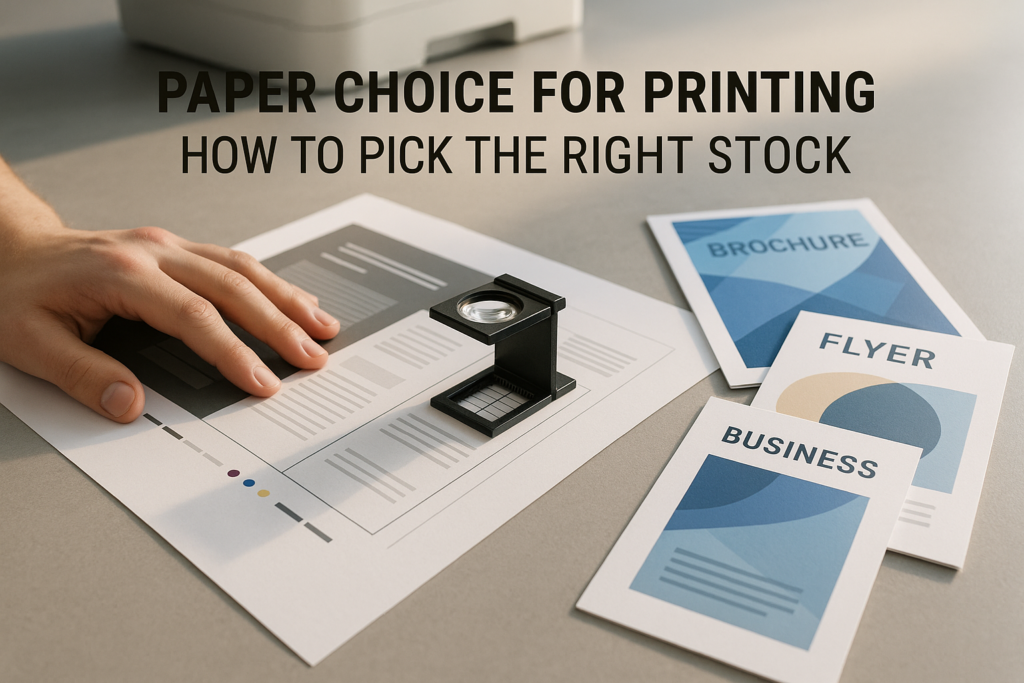
Paper choice for printing can change the way a project looks, feels, folds, mails, and performs. Two designs can use the same artwork and still feel completely different if one is printed on a lightweight gloss sheet and the other is printed on a heavier uncoated stock.
For small business owners, office managers, and marketing teams, paper is often one of the last decisions before production. It shouldn’t be an afterthought. The right stock can make a brochure feel more polished, help a postcard survive handling, or keep an internal form practical and affordable.
This guide explains the main paper differences in plain language, how they apply to common business printing projects, and what to confirm before requesting a quote.
Paper Choice for Printing: The Basics
When a printer talks about paper, they’re usually referring to a few key factors: weight, finish, brightness, opacity, texture, and intended use. You don’t need to memorize every paper term, but it helps to understand how these choices affect the finished piece.
Paper weight affects thickness and stiffness. Finish affects how ink sits on the sheet and how the piece feels in someone’s hand. Opacity affects how much show-through you’ll see from the opposite side. Texture can make a piece feel more formal, natural, or premium.
If you’re planning general business printing, these details matter because different projects have different jobs. A sales flyer needs to grab attention. A form needs to be easy to write on. A business card needs to hold up in a wallet. A booklet needs to turn smoothly without feeling bulky.
Text Weight vs Cover Weight Paper
One of the most common points of confusion is the difference between text weight and cover weight paper.
Text weight paper
Text weight paper is generally used for items that need to bend, fold, or include multiple pages. It’s often used for letterhead, flyers, brochures, newsletters, inserts, sell sheets, and booklet interior pages.
Text stock can still feel substantial, especially in higher weights, but it usually isn’t as rigid as cover stock. If your piece needs to fold cleanly or fit into an envelope, text weight paper may be a better fit.
Cover weight paper
Cover weight paper is thicker and more rigid. It’s commonly used for business cards, postcards, rack cards, presentation covers, pocket folders, hang tags, and some invitations.
Cover stock gives a piece more structure. That can be helpful when the item will be handed out, mailed without an envelope, displayed on a counter, or kept for reference. If you’re ordering business cards, postcards, or premium handouts, cover weight paper is usually part of the conversation.
Coated vs Uncoated Paper
Finish is another big decision. The two broad categories are coated and uncoated paper.
Coated paper
Coated paper has a surface treatment that can create a gloss, dull, satin, or matte look depending on the stock. It often helps photos, color blocks, and marketing graphics appear crisp and vibrant.
Coated stocks are common for brochures, catalogs, presentation materials, retail promotions, and many flyer printing projects. If your design relies on full-color photography or a polished marketing look, coated paper may be a strong choice.
Uncoated paper
Uncoated paper has a more natural surface. It feels less slick and is often easier to write on. It’s widely used for letterhead, envelopes, forms, appointment cards, reports, worksheets, and projects where readability or writability matters.
Uncoated paper can also support a more understated or professional look. For example, a financial services report, nonprofit appeal letter, school packet, or law firm stationery package may benefit from a clean uncoated sheet.
How Paper Choice Applies to Common Projects
The best paper depends on the purpose of the printed piece. Here’s how to think about paper selection for common business projects.
Flyers and sell sheets
Flyers are often used for promotions, announcements, menus, and quick sales materials. If the flyer is being handed out in volume, a practical text weight stock may work well. If it’s a premium sales sheet for a presentation folder or meeting, a heavier text stock or lighter cover stock may feel more appropriate.
Coated paper can help images and colors stand out, while uncoated paper can be easier to write on if the flyer includes notes, pricing, or sign-up information.
Brochures
Brochures need to fold well. Paper that’s too heavy for the fold pattern can crack, bulk up, or feel awkward. A tri-fold brochure, for example, usually needs a stock that balances quality with flexibility.
If you’re printing brochures with photos, coated paper is often considered. If the brochure has a lot of text, forms, or a more formal tone, uncoated may be a better fit. Always confirm folding recommendations with your print shop before production.
Business cards
Business cards rely heavily on feel. A flimsy card can leave the wrong impression, while a thicker stock can feel more durable and professional. That said, thicker isn’t automatically better for every brand or budget.
Finish also matters. Gloss can make colors pop, matte can feel refined, and uncoated can be easier to write on. If you’re redesigning your cards, it may also help to review common business card printing mistakes to avoid before placing the order.
Postcards and direct mail
Mail pieces need to survive handling. Paper choice can affect durability, postage requirements, address visibility, and whether the piece can run properly through mailing equipment. For direct mail printing, it’s smart to discuss paper, size, coatings, addressing areas, and postal requirements early.
If you’re planning a larger campaign, ask your print shop to review the mail panel and production specs before printing. Small layout issues can create avoidable delays.
Reports, manuals, and booklets
Multi-page documents need paper that feels good in a stack and turns easily. Interior pages are often printed on text weight paper, while covers may use a heavier cover stock for protection and presentation.
Opacity matters here. If a report has heavy ink coverage or two-sided printing, a sheet with better opacity can reduce show-through. Binding style, page count, and use case should all be considered before choosing paper.
Event and trade show materials
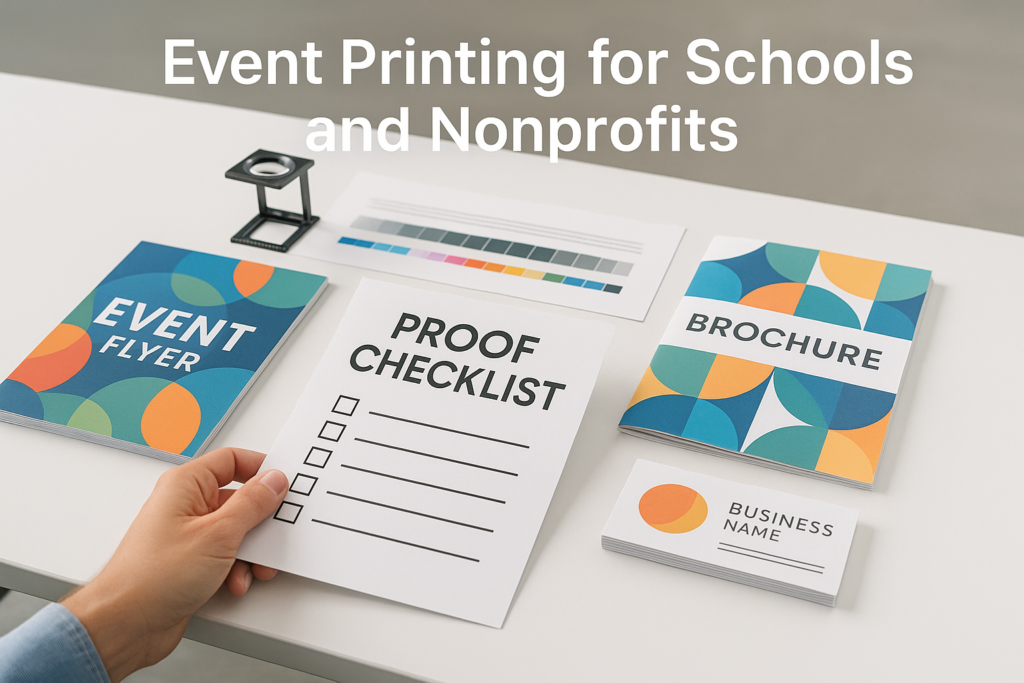
Event printing often involves a mix of pieces: badges, signs, handouts, programs, inserts, tabletop displays, and follow-up cards. Each item may need a different stock. A handout may need to be light enough to carry, while a card at a booth may need more stiffness.
For larger events, it’s worth reviewing your full print list together rather than ordering each item separately. If you’re preparing booth materials, see how paper and format choices fit into broader trade show printing needs.
Common Paper Selection Mistakes
Most paper problems happen because the paper was chosen without considering how the piece will actually be used. Here are a few mistakes to avoid.
- Choosing only by thickness. A heavier sheet may feel better, but it may not fold, mail, or bind the way you expect.
- Using glossy paper for writable pieces. If customers or staff need to write on the piece, confirm that the stock and coating will allow it.
- Ignoring mailing requirements. Size, weight, thickness, coating, and layout can all affect direct mail production.
- Picking paper before the design is final. Heavy ink coverage, photos, fold lines, and page count can change the best stock recommendation.
- Assuming all matte stocks are the same. Matte coated paper and uncoated paper can look and feel very different.
File Setup, Color, and Proofing Tips
Paper choice and file setup are connected. A design with full bleeds, large solids, fine type, or color-critical branding may behave differently depending on the stock. Before you send files, review artwork basics like bleed, safe margins, resolution, color setup, and proofing expectations in the Premier Pre-Press ToolKit.
If your design runs to the edge of the sheet, make sure it includes proper bleed. You can also read more about bleed, trim, and safety margins in printing if you’re preparing files internally.
Color is another reason to talk with your printer before production. Coated and uncoated papers can make the same color appear different. If exact brand color is important, ask about proofing options and what can be reasonably expected from the paper and print method being used.
Timeline Expectations When Paper Matters
Paper choice can affect scheduling, especially if the project requires a specific stock, special finish, unique size, folding, scoring, binding, mailing, or a hard deadline. Standard papers may be easier to plan around, while specialty stocks may require extra coordination.
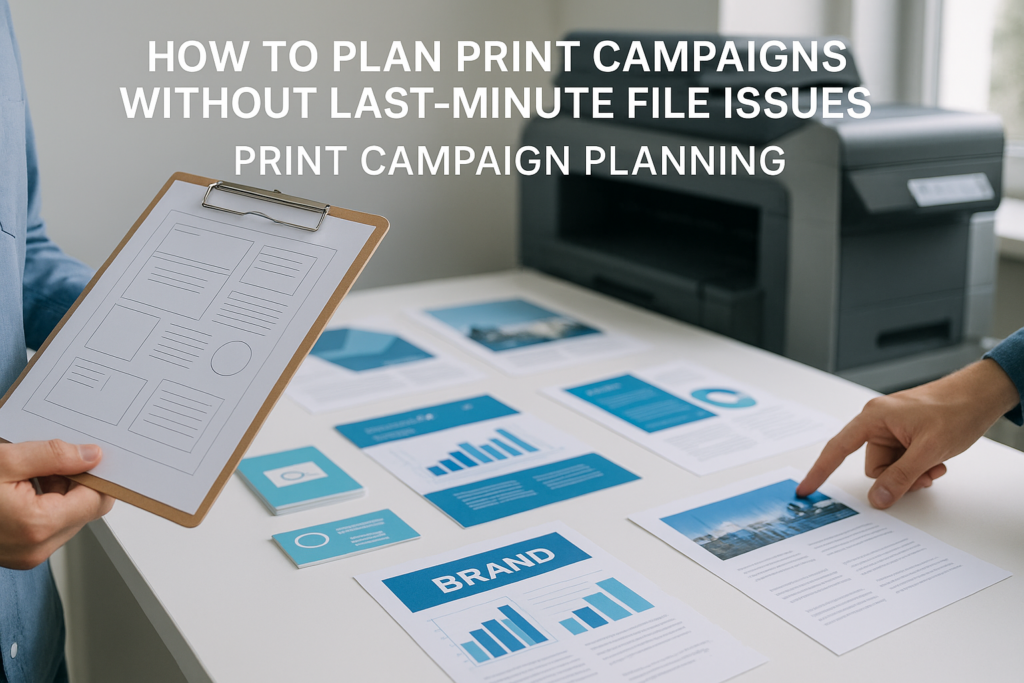
Don’t wait until the day before printing to ask about paper if the piece is important. If you’re working backward from a meeting, mailing date, trade show, or campaign launch, build in time for file review, proofing, production, finishing, and delivery or pickup. For bigger campaigns, the planning advice in how to plan print campaigns without last-minute file issues can help your team avoid common delays.
When to Ask for Help Choosing Paper
You don’t need to choose paper alone. In fact, the best time to ask is before the file is final. A print shop can help you match the paper to the goal, budget, quantity, artwork, finishing, and deadline.
Bring a few details to the conversation: what you’re printing, how it will be used, whether it will be mailed, how long it needs to last, whether people need to write on it, and whether color accuracy is critical. If you manage frequent orders for multiple departments or locations, a managed print process or request portal may also help standardize paper choices and reduce reordering confusion.
If you’re not sure where to start, you can describe the project and ask for paper recommendations as part of a print quote request. A short conversation upfront can prevent reprints, missed expectations, and last-minute changes.
Conclusion: Match the Paper to the Purpose
Paper choice for printing isn’t just about picking something thick, glossy, or inexpensive. It’s about matching the stock to the purpose of the project. A flyer, brochure, report, postcard, business card, and direct mail piece each have different needs.
Before ordering, think about how the piece will be handled, folded, mailed, written on, displayed, or saved. Then confirm the paper, finish, file setup, proofing needs, and schedule with your print shop before production.
Need help choosing paper for an upcoming project? Contact Premier Printing Services for more information, paper guidance, or help preparing your next print order.