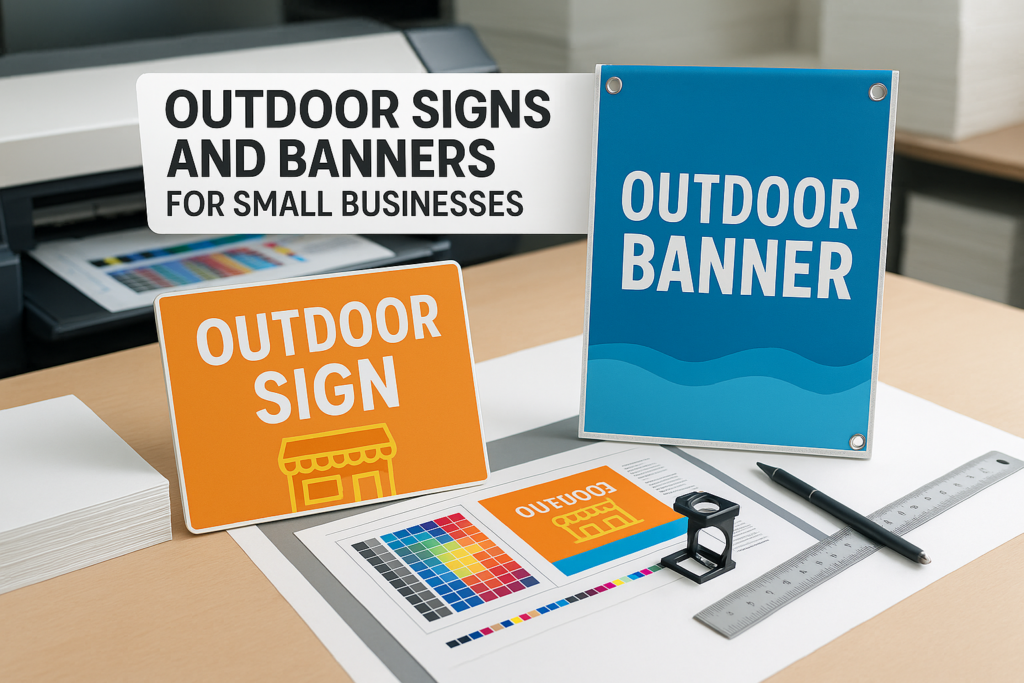
Outdoor signs and banners are some of the most practical print tools a small business can use. They can point people to your entrance, announce a seasonal promotion, support a grand opening, or help customers find your booth at an event.
They’re also projects where small details matter. A banner that looks great on a laptop screen may be hard to read from the road. A sign that works indoors may not be the right fit for wind, sun, rain, or repeated handling.
If you’re planning outdoor signage for your business, it helps to think through the message, placement, material, file setup, and deadline before requesting a quote. The right questions upfront can save time and help your printer recommend an option that fits the job.
Why Outdoor Signs and Banners Help Small Businesses Get Noticed
Small businesses often need marketing that works close to the point of sale. Outdoor signs and banners do exactly that. They catch attention near your storefront, event space, parking lot, jobsite, or pop-up location.
For retailers, restaurants, service businesses, schools, nonprofits, and offices, signage can answer basic customer questions before anyone walks inside. Are you open? Is there a sale? Where should visitors park? Which entrance should they use?
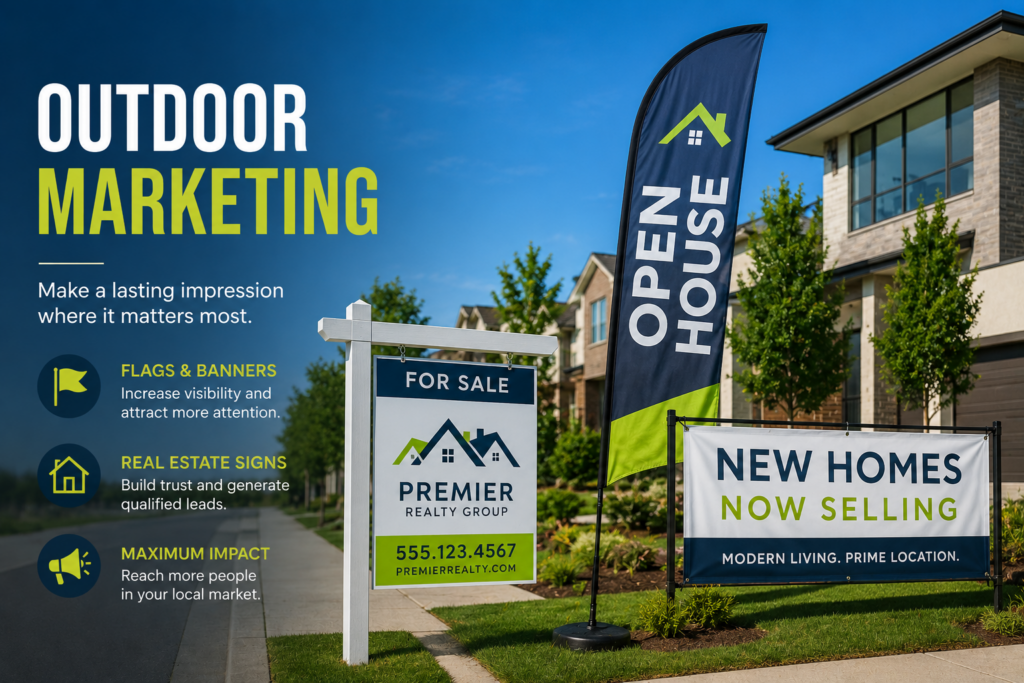
Outdoor signage also supports other marketing. A direct mail campaign, social media promotion, or local event can drive people to a location, while a clear banner or sign helps them recognize the offer when they arrive. For more ideas on storefront visibility, see Premier Printing Services’ guide on how outdoor marketing can draw attention to your storefront.
Common Types of Outdoor Signs and Banners
There isn’t one best sign for every situation. The right choice depends on where it will be displayed, how long it needs to stay up, how it will be installed, and what kind of visibility you need.
Vinyl banners
Vinyl banners are a common choice for promotions, events, storefront announcements, and temporary directional signage. They’re often used with hems, grommets, pole pockets, or other finishing options depending on how they’ll be hung. If you’re planning a banner project, the banner printing page is a helpful place to start.
Mesh banners
Mesh banners may be considered when airflow matters, such as certain fence or outdoor display applications. They can reduce wind resistance compared with a solid banner, but the best material depends on the specific use and location. Always confirm recommendations with your print shop before production.
Yard signs
Yard signs are often used for real estate, political campaigns, schools, service businesses, event parking, and local promotions. They’re helpful when you need lightweight outdoor signage that can be placed in grass or soft ground with appropriate stakes.
A-frame and sidewalk signs
A-frame signs are useful for businesses that want to update foot traffic near a storefront, office, restaurant, salon, or event entrance. They’re especially helpful when customers may walk past without realizing you’re open or running a special.
Rigid signs
Rigid outdoor signs may be used for longer-running displays, property notices, directional signs, construction sites, parking areas, and building identification. Common substrates vary by project, so ask your printer what is appropriate for outdoor exposure, mounting, and local conditions.
Window graphics and decals
Window graphics can turn unused glass into promotional space. They can be used for hours, seasonal offers, branding, privacy, or wayfinding. Installation surface, visibility, and removal needs should be discussed before ordering.
How to Match the Sign to the Goal
Before choosing a material, define what the sign needs to do. A banner for a two-day sidewalk sale is different from a directional sign used every week. A sign viewed by drivers needs a different layout than one read by pedestrians at close range.
Here are a few common goals and what to consider:
- Grand openings: Use short, bold messaging that is easy to read from a distance. Include the business name, opening message, and any key offer or date.
- Sales and promotions: Keep the offer simple. Too much text can make the sign less effective.
- Events: Think about entry points, registration areas, parking, sponsor recognition, and directional needs. Event teams may also find this guide to event printing for schools and nonprofits useful.
- Retail storefronts: Window signs, sidewalk signs, and banners can work together to promote seasonal offers. Premier also has dedicated retail printing services for businesses coordinating multiple printed pieces.
- Trade shows and pop-ups: Consider portability, setup time, booth visibility, and whether the graphics will need to be reused. See trade show printing options if your signage is part of a larger display package.
Design Tips for Outdoor Signs and Banners
Outdoor signage has to work quickly. People may see it while walking, parking, driving past, or moving through an event. That means the design should be simpler than a flyer or brochure.
Use fewer words
A good outdoor sign usually communicates one main idea. Instead of listing every service or product, focus on the action you want someone to take. Examples include “Now Open,” “Free Consultation,” “Parking in Rear,” “Spring Sale,” or “Check In Here.”
Prioritize readability
Large text, high contrast, and clean spacing matter. Decorative fonts can be hard to read at a distance, especially on busy streets or in crowded event spaces. If the sign will be viewed from far away, ask your print provider for input on size and legibility.
Include only essential contact details
For many outdoor signs, a website, phone number, or QR code may be enough. If you include a QR code, make sure it is large enough for the viewing distance and test it before printing. The landing page should also be mobile-friendly.
Think about placement before designing
A banner hung high on a fence may need larger text than one placed near an entry table. A sign near a road may need fewer words than one near a checkout line. Share photos of the installation area with your printer if you’re unsure what size or format makes sense.
File Setup and Prepress Tips Before Ordering
File setup is one of the most common places where sign projects slow down. Large-format artwork needs to be prepared carefully, especially when logos, photos, small text, bleeds, and brand colors are involved.
Before sending files, review Premier Printing Services’ Prepress Toolkit. It can help you understand common artwork requirements and reduce avoidable delays.
- Confirm final size: Make sure the artwork matches the intended finished size or is built at an approved scale. Ask your printer what they prefer for large-format files.
- Use high-quality images: Photos that look fine on social media may not hold up when enlarged. If the image is important, ask for a file review before production.
- Set up bleed and safe areas: Bleed and safety margins help prevent important content from being too close to the edge. For a deeper explanation, see this guide to bleed, trim, and safety margins in printing.
- Check colors: Screen colors and printed colors may not match exactly. If brand color is critical, discuss proofing and color expectations before printing.
- Outline or package fonts: Missing fonts can change the appearance of your artwork. Ask whether your printer prefers outlined text, packaged files, or print-ready PDFs.
- Proof carefully: Names, phone numbers, URLs, dates, and directional arrows should be checked by more than one person when possible.
Common Mistakes to Avoid
Most outdoor sign problems are preventable. A little planning can help you avoid reprints, rushed approvals, or signage that doesn’t work well in the real world.
Trying to say too much
A banner isn’t a brochure. If someone needs to stop and read several lines, the message is probably too dense. Keep the main message clear and move supporting details to a flyer, landing page, or follow-up piece.
Choosing size without considering distance
A sign that looks large in the office may feel small once it’s outside. Think about the viewing distance, surrounding distractions, and whether people will be walking or driving when they see it.
Forgetting installation details
How will the sign be mounted, hung, carried, stored, or reused? Finishing options can depend on the installation method. Confirm details like grommet placement, pole pockets, stakes, stands, or mounting needs before production.
Waiting too long to start
Even straightforward projects need time for quoting, artwork review, proofing, production, and possible revisions. If you’re working toward an event, sale date, or opening day, start as early as you can. For larger campaigns, this article on planning print campaigns without last-minute file issues is worth reviewing.
What to Prepare Before Requesting a Quote
A clear quote request helps your printer respond with better recommendations. You don’t need to know every production detail, but you should be ready to explain the basics.
When requesting a quote for outdoor signs and banners, gather the following:
- Finished size or approximate size range
- Quantity needed
- Where the sign will be used, such as storefront, fence, yard, sidewalk, booth, or parking area
- How long it needs to be displayed
- Whether it will be reused
- Preferred material if you already know it
- Finishing needs, such as grommets, hems, stakes, stands, or mounting
- Artwork status, including whether you have print-ready files or need design help
- Important deadline or event date
- Delivery, pickup, or shipping needs
If signage is only one part of your project, mention the other items too. Many small businesses combine banners with flyers, business cards, mailers, menus, or event handouts. Premier’s small business printing services can help teams coordinate multiple printed pieces with consistent branding.
When to Ask Your Printer for Help
You don’t have to solve every detail before reaching out. In fact, it’s better to ask early if you’re unsure about materials, sizing, installation, file quality, or outdoor use.
A professional print team can help you compare options, review artwork, flag possible production issues, and recommend practical choices based on how the sign will be used. If you manage recurring print needs for multiple departments, branches, or locations, it may also be worth asking about a custom print ordering portal to keep repeat orders organized.
FAQ: Outdoor Signs and Banners
What is the best material for an outdoor banner?
It depends on where the banner will be displayed, how long it needs to last, and how it will be installed. Vinyl is common for many outdoor banners, while mesh may be considered for certain windy locations. Confirm the best material with your print shop before production.
How large should my outdoor sign be?
Size depends on viewing distance, location, message length, and surrounding visual clutter. A pedestrian sign can usually use different sizing than a sign meant to be seen from the road. Share photos and measurements with your printer if you need guidance.
Can I use my logo from my website for a large banner?
Maybe, but web images are often too low in resolution for large-format printing. Vector logo files or high-resolution artwork are usually better. Send the file to your printer for review before assuming it will print clearly.
Do outdoor signs need bleed?
Many print projects require bleed or safe margins, but exact setup can vary by product and finishing method. Review the file guidelines and confirm requirements with your printer before submitting final artwork.
Final Thoughts on Outdoor Signs and Banners
Outdoor signs and banners can be a smart, flexible way to advertise a small business, support an event, or improve customer wayfinding. The best results come from matching the sign to the goal, keeping the design readable, and confirming production details before the job goes to print.
If you’re planning outdoor signage and want help choosing the right format, preparing artwork, or building a quote, contact Premier Printing Services for more information or project help.